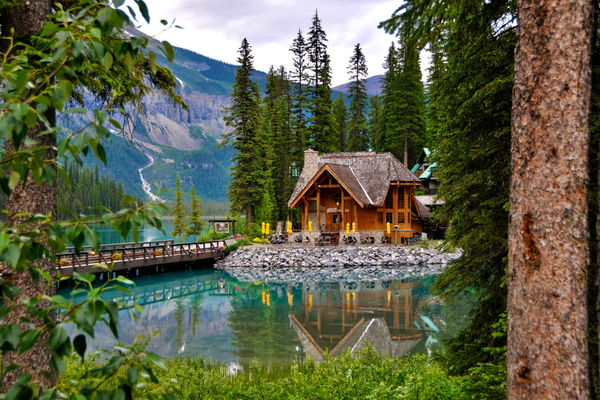
A three-season cottage on a lake near Haliburton, Ontario can look like an easy purchase right up until the bank's appraiser notices the road isn't plowed from November to April. That one detail can move the file from approved to declined.
A cottage mortgage in Canada is a loan secured by a recreational or second property, and the rules depend on the building as much as on you. Year-round, winterized cottages with road access can often be financed much like a regular home, sometimes with as little as 5% down on the first $500,000. Seasonal, water-access, or off-grid cottages usually need 20% or more down, a specialty lender, or financing secured against the home you already own.
If the bank has already passed on your file, the deal isn't necessarily dead. In many cases the property failed a line on the bank's checklist, and your finances were never the real problem. Specialty options like private mortgages for properties banks won't finance exist for exactly that gap.
How a cottage mortgage works in Canada
Lenders don't treat every cottage the same way. Before anyone looks at your income or credit, the property gets classified, because the property decides which rulebook applies to the whole application.
Year-round cottages (often called Type A)
A winterized cottage with a permanent foundation, a proper heat source, drinkable water, and year-round road access is usually treated a lot like a house in town. Under CMHC second home insurance, the property has to be suitable for full-time, year-round occupancy, with year-round vehicle access (a bridge or ferry counts for islands). It also has to be for your own use, not a rental.
When those boxes are ticked, the standard insured down payment applies: 5% on the first $500,000 and 10% on the portion above that. Insured financing is only available when the purchase price is under $1.5 million.
Seasonal cottages (often called Type B)
Now picture a cabin with a wood stove, lake water drawn by a pump, and a road the cottage association maintains only in summer. Many lenders put that property in a second bucket. Mortgage insurance generally isn't an option, so you're looking at a conventional mortgage with at least 20% down. Some banks ask for more. Some won't lend at all.
The stress test still applies
On an uninsured mortgage from a federally regulated lender, OSFI requires you to qualify at the greater of your contract rate plus 2% or 5.25%. That test runs on top of the mortgage you already carry on your home, which is where plenty of financially healthy buyers come up short.
Before you ask whether you can afford the cottage, find out which bucket the lender will put it in. That answer sets your down payment, your lender options, and your cost.
Why banks decline cottage mortgages
Most cottage buyers we hear from aren't shocked that the bank was cautious. What frustrates them is that the decline rarely explains which part of the file caused it. In practice, it's usually one of these five issues:
- A road that isn't maintained in winter, or a property you can only reach by boat, is the most common reason a cottage falls outside bank lending.
- Untreated lake water, an aging septic system, or a building sitting on piers instead of a foundation can all turn into an appraisal problem.
- Carrying two properties changes your numbers. The lender adds the cottage payment, property taxes, and heating to your current housing costs, then tests the total against your gross and total debt service ratios. If you're already near the limit, here's how GDS and TDS ratios lead to bank declines.
- Plenty of buyers plan to rent the place out on weekends they aren't using it. Many lenders won't count short-term rental income to qualify you, and some will treat the property as an investment if renting is the main plan.
- If you write off a lot through your business, your Notice of Assessment can understate what you really earn, a common hurdle for self-employed Canadians trying to qualify for a mortgage.
Three of those five are about the building and the road. That's good news, because property problems usually have workarounds.
Five ways to finance a cottage when the bank says no
We call this the 5-Route Cottage Financing Map. Each route trades cost against flexibility differently, and the right one depends on how much equity you already have and how long you'll need the money.
| Route | Secured against | Usually best for | Main trade-off |
|---|---|---|---|
| B lender mortgage | The cottage | Year-round cottages where income or credit is the sticking point | Higher rate and a lender fee |
| Private mortgage | The cottage | Seasonal, water-access, or fast-closing deals | Higher cost and a short term |
| HELOC or second mortgage | Your principal home | Owners with built-up home equity | Your home carries the risk |
| Refinance your home | Your principal home | Owners who still qualify with their bank | Possible prepayment penalty |
| Vendor take-back | The cottage | Sellers whose listing has sat for months | Seller has to agree |
B lender and private mortgages on the cottage
A B lender will often look past a messy income picture on a year-round cottage. A private lender goes further and focuses mainly on the property's value and your equity, which is why private money is common for seasonal or water-access places. Expect higher rates, lender and broker fees, and terms that usually run one to two years. Check what private mortgage fees actually cost before you compare offers.
Borrowing against the home you already own
If your principal residence has solid equity, a HELOC or second mortgage can let you buy the cottage without a cottage mortgage at all. The bank's objections to the road or the septic stop mattering, because the cottage isn't the security. Our guide to the second mortgage vs. HELOC decision covers which fits better.
Vendor take-back
In a vendor take-back, the seller lends you part of the price and registers a mortgage behind (or instead of) a lender's. Sellers of rural properties that have sat on the market for a while are often open to it.
If you have real equity in your home and steady income, a seasonal road shouldn't be the thing that kills the deal. Start with the route secured by the property lenders already like, then work outward.
How to get a cottage mortgage approved in 2026
Go back to that Haliburton cottage. Say the buyers have about $400,000 of equity in their Oakville home, one self-employed income, and a bank that won't touch a seasonal road. Arguing with the bank won't change its answer. A plan built around the property's weak spots from day one will get them to closing.
The 4-Step Cottage Approval Plan
- Get the property facts before you firm up. Confirm road maintenance in writing, test the water, inspect the septic, and get an insurance quote. Keep your offer conditional on financing and inspection.
- Decide which property carries the debt. If the cottage is the problem, secure the loan against your home instead. If your home mortgage is locked at a low rate, a separate loan on the cottage may cost less overall.
- Build a complete file. Have recent bank statements, two years of Notices of Assessment, your current mortgage statement, and the listing details ready. Knowing what to expect during the application process saves days.
- Write down your exit before you sign. A short private term needs a clear way out, such as winterizing so the cottage qualifies with a bank, refinancing once your income shows up on paper, or selling another asset. Our private mortgage exit strategy guide walks through each option.
Step four is the one people skip most often. Without a written exit, a one-year private term can end with no lender ready to take over.
Solid Capital is a Canadian alternative lender for homeowners and business owners the big banks have declined or under-served. We read the full file (your equity, bank statements, income history, and the property itself) instead of stopping at a credit score, and a Canadian advisor reviews every application personally. If a cottage purchase is stuck, start an application with Solid Capital. It takes about five minutes, and there's no impact to your credit to apply.
The bank's checklist was built for houses in town, and a cottage on a seasonal road was never going to fit it neatly. That doesn't make it a bad purchase. You just need a different lender.
Frequently Asked Questions
Can you get a mortgage on a cottage with no year-round access?
Yes, but usually not with mortgage insurance or from most big banks. Seasonal and water-access cottages typically need 20% or more down from a specialty or private lender. Another option is to borrow against the home you already own.
How much down payment do you need for a cottage in Canada?
A year-round cottage for your own use, priced under $1.5 million, can qualify for CMHC second home insurance with 5% down on the first $500,000 and 10% on the rest. Seasonal or rental cottages usually need at least 20% down, and some lenders ask for more.
Can you use a HELOC to buy a cottage?
Yes, and it's a common approach. You draw on the equity in your principal residence and buy the cottage without a separate cottage mortgage. The trade-off is that your main home secures the debt, and HELOC rates are usually variable.
Does cottage rental income help you qualify for a mortgage?
Often it doesn't. Many lenders won't count short-term rental income toward qualifying, and if renting is the main purpose, the property may be treated as an investment requiring at least 20% down. Some alternative lenders will consider documented rental history.
Does the mortgage stress test apply to a cottage mortgage?
For an uninsured mortgage from a federally regulated lender, yes. OSFI requires you to qualify at the greater of your contract rate plus 2% or 5.25%. Private lenders aren't bound by that rule, but they still look at equity and your ability to make payments.
How long does a private cottage mortgage usually last?
Private mortgage terms usually run one to two years. That's why you need a clear exit plan before signing, such as winterizing the cottage so a bank will finance it or refinancing once your income is easier to document.