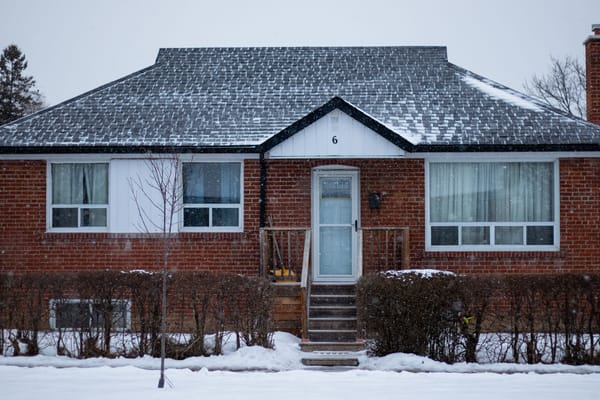
Three siblings in Hamilton inherit their mother's bungalow, appraised at $900,000. One of them wants to keep it. The other two want their share in cash. The bank says it can't help until the house is in one name, and the estate can't transfer it until someone pays the other two. That circular problem is where a lot of family estates get stuck.
Buying out siblings from an inherited house in Canada means paying each co-heir the cash value of their share, usually by placing a new mortgage on the property on the same day title moves from the estate into your name. Your lawyer or notary coordinates both steps. When a bank won't fund it, a private mortgage often can, because it's approved on the property's equity rather than your salary alone.
Below is the buyout math, the order the paperwork has to happen in, the taxes that come due first, and the financing that tends to get these deals closed.
How to buy out siblings from an inherited house in Canada
Many buyouts stall because the steps happen in the wrong order. You can't mortgage a house you don't own yet, and the executor shouldn't hand over the property until the estate's bills are settled. This is the order most lawyers follow.
The 5-Step Inheritance Buyout Path
- Get an independent appraisal. Every sibling should agree on one appraiser before the report comes back. A lender will order its own valuation too, so a credible number up front saves a second argument later.
- Confirm the estate's status with the executor. Has probate been granted? Has the final tax return been filed? Is there an existing mortgage, line of credit, or unpaid property tax on the house? Each one changes how much cash the estate has to divide.
- Put the buyout price in writing. A short agreement signed by every beneficiary sets the price, who pays which costs, and the closing date. Without it, one sibling can reopen the number the week before funding.
- Arrange the financing. The lender funds a new mortgage, and that money pays the other beneficiaries through the estate or directly, depending on how your lawyer structures it.
- Close through a lawyer or notary. Title transfers from the estate to you, the mortgage registers, and your siblings get paid, all on the same day.
What the buyout math looks like
Take the Hamilton example. The house is worth $900,000 and has no mortgage, so each of the three siblings owns a $300,000 share. The sibling keeping it needs $600,000 to pay out the other two, before closing costs. That's about 67% of the home's value.
So can a bank lend that much? Under OSFI Guideline B-20, federally regulated lenders cap a refinance at 80% of the property's value, which is $720,000 here. That part works. The harder question is whether your income qualifies for a $600,000 mortgage at the stress-tested rate, and that's where many inheritance buyouts stall.
Why banks often say no to an inheritance buyout
Inherited homes usually carry plenty of equity. The paperwork around them is usually messy. Banks don't lend on equity alone, and a buyout tends to trip three of their rules at once.
Your income has to carry the whole mortgage
A $600,000 buyout mortgage is underwritten like any other refinance, so your debt service ratios have to fit at the qualifying rate. If you're self-employed, recently retired, or already carrying a mortgage on your own home, the math often fails even though the house has hundreds of thousands in equity sitting in it.
The title isn't in your name yet
Banks prefer clean files where the borrower already owns the property. An estate transfer, a buyout agreement, and a pending CRA clearance certificate all on one closing make many A-lenders nervous, especially when a beneficiary lives outside Canada.
The house may need work
Inherited homes are often dated. A 1960s bungalow with knob-and-tube wiring or an old buried oil tank can fail a bank's property review before anyone looks at your income.
When a bank says no here, it's reacting to its checklist, not to the deal. A short-term lender that reads the whole file can often fund it, much like the situation we cover in our guide to a spousal buyout mortgage, where one person keeps the home and pays out the other.
Inheritance buyout financing options compared
There are five realistic ways to fund a sibling buyout. The right one depends on whether you already own a home, how much the buyout is, and how fast the siblings want their money.
| Option | Best for | How much you can access | What to watch |
|---|---|---|---|
| Bank refinance of the inherited home | Strong, provable employment income | Up to 80% of value in total | Stress test and a slower approval |
| HELOC or second mortgage on your own home | Smaller buyouts where you already have equity at home | Depends on your own home's equity | Puts your current home on the line |
| Private first mortgage on the inherited home | Income that won't fit bank ratios, or a tight deadline | Based mainly on the property's equity (see how much equity you need) | Higher cost, and it's short term (often 1 to 2 years) |
| Private second mortgage | An existing mortgage on the estate property that you keep | Equity above the first mortgage | The first lender's consent and terms |
| Sale to a third party | Nobody can finance the buyout | Full market value, split among heirs | Realtor fees and losing the house |
If you're weighing the two options tied to your own home, our breakdown of a second mortgage vs. a HELOC covers the trade-offs in more detail.
Honestly, if keeping the house is the goal, a short private mortgage that pays your siblings on a fixed date is often a better deal than a year of family standoff over who blinked first. The cost is real, but it's temporary, and a clear private mortgage exit strategy (refinancing with a bank once title and income are sorted) keeps that cost to a year or two.
Costs to plan for before you sign
The buyout price is only part of the bill. Several costs come out of the estate or your pocket before anyone gets paid, and ignoring them is how a sibling ends up short at closing.
Probate fees
These vary widely by province. In Ontario, the Estate Administration Tax is $0 on the first $50,000 of an estate's value and $15 per $1,000 above that. On a $900,000 estate, that's $12,750. Alberta's fees are capped at a few hundred dollars, and a notarial will in Quebec doesn't need probate at all.
Tax on the deceased's final return
When someone dies, the Canada Revenue Agency treats their property as sold at fair market value. If the house was the parent's principal residence for every year they owned it, the principal residence exemption usually shelters the gain. If it was a cottage or rental, capital gains tax may be owed by the estate before anything is distributed.
The CRA clearance certificate
Executors can ask the CRA for a clearance certificate (Form TX19) confirming the estate's taxes are paid. An executor who distributes property without one can be personally liable for unpaid tax, so many will hold back cash until it arrives. That can take months, which is why the buyout timeline should be planned around it.
Legal, appraisal, and lender fees
Budget for the appraisal, legal fees on both the estate side and the mortgage side, and lender or broker fees if you use private financing. Our guide to private mortgage fees in Canada lists what those typically include. In some provinces, paying cash for a sibling's share can also trigger land transfer tax on the portion you buy, so ask your lawyer before you agree on a price.
Solid Capital is a Canadian alternative lender that funds buyouts banks turn down. We look at the full picture (the home's equity, the estate timeline, and your real income) instead of stopping at a credit score or one debt ratio. If you've inherited a home and want to keep it, start an application with Solid Capital. It takes about five minutes, there's no impact to your credit to apply, and a Canadian advisor reviews every file personally.
The house is often the last thing a parent leaves behind. Keeping it shouldn't come down to one bank's formula. Get the price in writing first.
Frequently Asked Questions
Can I get a mortgage on an inherited house before probate is done?
Usually not in your own name, because you don't hold title yet. Most lenders wait until the executor has authority to transfer the property, then fund the new mortgage on the same day title moves to you. Some private lenders can lend to the estate itself in limited cases, for example to cover debts or taxes, but that depends on the will and the executor's authority.
How do you calculate a sibling buyout on an inherited home?
Start with an agreed appraised value, subtract any mortgage or debts on the property, and divide by each person's share under the will. If a $900,000 home with no mortgage is split three ways, each share is $300,000, and the sibling keeping it pays $600,000 to the other two, plus or minus any agreed closing costs.
Do I pay capital gains tax when I inherit a house in Canada?
Beneficiaries don't pay tax simply for inheriting. The deceased is treated as having sold the property at fair market value on their final return. If it was their principal residence, the exemption usually covers the gain. If it was a cottage or rental, the estate may owe capital gains tax before the house is distributed.
Can a sibling force the sale of an inherited house?
Often, yes. In Ontario, a co-owner can apply to court under the Partition Act to have a jointly owned property sold, and other provinces have similar rules. A court-ordered sale is slow and expensive for everyone, which is why a financed buyout at an agreed price is usually the better outcome for the whole family.
How long does an inheritance buyout take in Canada?
It depends mostly on the estate, not the mortgage. Probate can take weeks to months depending on the province, and a CRA clearance certificate can add several more months. Once the estate is ready to transfer title, financing can often be arranged in a few weeks, and faster with a private lender for approved files.
Does applying for buyout financing affect my credit score?
Applying with Solid Capital has no impact on your credit. A full mortgage approval with any lender will eventually involve a credit check, and the new mortgage will appear on your credit report once it's registered, just like any other mortgage.