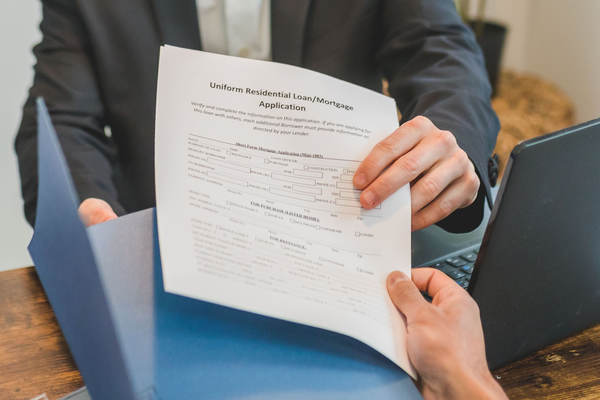
An owner-operator in Milton, Ontario found a 2021 highway tractor with 620,000 km on the clock, priced at $118,000. The dealer wanted 15% down by Friday. His bank wanted two years of corporate tax returns he did not have, because the corporation was nine months old.
Truck financing in Canada is asset-based lending secured by the truck itself. A lender advances most of the purchase price, registers a lien against the unit, and you repay over a term that usually runs 36 to 72 months. Approval turns on four things: the age and mileage of the unit, how long you have been operating, what your bank deposits look like, and your credit. Banks weigh credit and time in business hardest. Equipment lenders and alternative business financing providers weigh the asset and your cash flow.
What follows is the part most owner-operators learn the expensive way: what lenders actually check, what the unit costs to run once it is yours, and where the money comes from after a bank decline.
How truck financing works in Canada
A truck loan and a truck lease do the same job in different wrappers. With a loan you own the unit from day one, and the lender registers a security interest against it in the provincial lien registry. With a lease the lessor owns it and you hold the right to use it, usually with a buyout at the end of the term.
Terms are shorter than most buyers expect. A newer unit with low mileage can stretch to 60 or 72 months. A 2016 tractor with 900,000 km will not, because no lender wants an amortization that outlives the engine. That one rule explains most of the frustration owner-operators run into when they ask for a longer term and get refused.
Loan, lease, or lease-to-own
Ownership gives you the asset and the depreciation claim. A lease keeps the payment lower and the balance sheet lighter, and it hands resale risk to somebody else. Lease-to-own sits between the two and is common for drivers stepping off a company job with thin credit and no corporate history. We compare the trade-offs in detail in our guide to equipment financing versus leasing in Canada.
Who actually lends on trucks
Four groups do the bulk of it: banks and credit unions, manufacturer finance arms tied to one brand, independent equipment finance companies, and alternative lenders. They price differently because they underwrite differently. A bank prices off your credit file. An equipment lender prices off the unit and its resale value. An alternative lender prices off your deposits and your odds of default over the next 12 months.
So match the lender to your weakest number. If credit is the problem, starting at the bank just costs you three weeks.
What Canadian lenders check before funding a truck
Underwriting a truck deal is not one decision. It is five, made in order. Call it the 5-Point Truck File, because that is what a credit adjudicator is quietly assembling while your application sits in the queue.
1. The unit
Year, mileage, VIN, spec, and where it is coming from. Dealer sales move faster than private sales because the paperwork and the lien check are handled for you. On a private purchase the lender runs a provincial lien search to confirm the seller owns the truck free and clear. Skip that step and you can end up buying somebody else's loan along with their tractor.
2. Authority and safety record
If you run in Ontario, your CVOR abstract is part of the file. Elsewhere it is your carrier profile under the National Safety Code. A conditional or unsatisfactory safety rating does not automatically end a deal, but it does move you out of bank territory quickly.
3. Bank statements
Three to six months of them, read line by line. Adjudicators look at deposit consistency, NSF counts, minimum daily balances, and whether you are already carrying advances that will compete with the truck payment. What lenders pull out of those pages is covered in our breakdown of what Canadian lenders look for in bank statements.
4. Credit
Personal credit counts for more than owner-operators expect, because a one-truck corporation has almost no business credit history of its own yet. Most lenders will ask for a personal guarantee either way.
5. Down payment and your freight
Cash down proves commitment and shrinks the lender's exposure if the unit ever gets repossessed. Commonly that means 10% to 20% on a used tractor, sometimes less on a newer one, sometimes more inside your first year. Then comes the question nobody prepares for: who are you hauling for? A signed lease agreement with a carrier, or a dedicated lane with a shipper, shifts an adjudicator's read of your file further than another 30 points of credit score would.
The operator who arrives with the safety abstract, six months of statements, the bill of sale, and a carrier lease agreement gets a different answer than the one who arrives with a dealer quote. Same truck, same credit, different file. Preparation is the cheapest rate reduction available to you.
Financing options when the bank says no
A decline from a big bank is not a verdict on the deal. It is a verdict on the box the bank has to fit you into, and that box was not built for a nine-month-old corporation with one tractor. Here is what the rest of the market looks like.
| Option | Best for | What secures it | Typical speed | Watch for |
|---|---|---|---|---|
| Bank or credit union truck loan | Two or more years operating, clean credit | The unit plus a personal guarantee | 2 to 4 weeks | Strict on time in business and credit score |
| Equipment finance company | Buying a specific unit from a dealer | The unit | 2 to 7 days | Older, high-mileage units get short terms |
| Alternative lender term loan | Bruised credit, under two years operating | Cash flow plus a guarantee | 24 to 72 hours in many cases | Higher cost of credit, shorter amortization |
| Revenue advance | Working capital between settlements | Future deposits | Same day to 48 hours | Daily or weekly remittance, easy to stack |
| Invoice factoring | Waiting 30 to 60 days on broker or shipper payment | Your receivables | 24 to 48 hours once set up | Customer notification, recourse terms |
| Sale-leaseback | Equity sitting in a paid-off unit | A truck you already own outright | 1 to 2 weeks | You give up title until the buyout |
Factoring is the option owner-operators skip most often. If the real problem is not the truck payment but the 45-day wait for a broker to pay, borrowing against the tractor is the wrong tool for it. Our guide to invoice factoring in Canada walks through the advance rates and the fees.
What the 35% rule means for your rate
Since 1 January 2025, the criminal interest rate under Canada's Criminal Code has been an annual percentage rate above 35%. There is a carve-out that matters here. Where the borrower is a corporation and the credit is for business purposes, commercial credit above $10,000 and up to $500,000 is capped at 48% APR instead, and credit above $500,000 sits outside the cap entirely. That is why an incorporated carrier can be quoted a number an individual could not legally be offered. We cover the mechanics in our explainer on the maximum legal interest rate in Canada.
Honestly, if you are hauling steady freight and your deposits show it, a decline should not end the conversation. That answer describes the bank's credit box, not your business. Owner-operators with a bruised score and 14 months of consistent settlements get funded elsewhere every week, and our guide on business loans with bad credit in Canada maps that route.
Real costs, tax treatment, and mistakes to avoid
The payment is the number everyone shops. It is also the smallest part of what the truck actually costs you.
Build the real number before you sign
Insurance on a single-unit authority, plates and IFTA, fuel, and a maintenance reserve all land whether or not the truck moves that week. A blown turbo does not wait for a good freight month. Set a per-kilometre maintenance reserve from the first settlement and treat it as a fixed cost, not a savings goal you get to skip.
Then test the payment against an average revenue month rather than your best one. If the deal only clears at 11,000 km, it does not clear.
The tax side, briefly
If you own the unit you cannot deduct the purchase price in a single year. You claim capital cost allowance instead. The Canada Revenue Agency places trucks and tractors designed and used for hauling freight, with a gross vehicle weight rating above 11,788 kg, in Class 16 at 40% declining balance. A new unit acquired after 30 March 2010 can fall into Class 18 at 60% instead. Lighter commercial vehicles usually sit in Class 10 at 30%.
The half-year rule normally cuts the first-year claim in half. On a $118,000 Class 16 tractor that is roughly $23,600 of capital cost allowance in year one rather than $47,200, before any accelerated investment incentive your accountant applies. Lease payments are generally deducted as an operating expense instead. Get your accountant to map your specific unit before you file, because the class follows the spec, not what the dealer wrote on the invoice.
Five mistakes that cost owner-operators real money
- Shopping the monthly payment instead of the total cost of credit across the full term.
- Buying the truck before securing the lane or the carrier lease agreement.
- Stacking a second and third revenue advance on top of an existing truck payment.
- Closing a private-sale purchase without a lien search.
- Running with no maintenance reserve, then financing the first breakdown at advance pricing.
Solid Capital is a Canadian alternative lender built for this exact file. We use alternative underwriting, which means we read the whole picture, your deposits, your freight, your operating history, and the unit you are buying, rather than stopping at a credit score. That is why business owners and homeowners who have been declined or under-served by the big banks end up here. Canadian advisors review every file personally, and for approved files funding can land inside 24 hours. If your business is generating revenue and you can show it, there is a real conversation to be had. Talk to a Solid Capital advisor: it takes about five minutes, and there is no impact to your credit to apply.
A bank looks at a score. An equipment lender looks at a unit. Neither one is looking at your business. Close that gap before you sign anything.
Frequently Asked Questions
Can you get truck financing in Canada with bad credit?
In many cases, yes. Alternative lenders and equipment finance companies weigh the truck, your bank deposits, and your operating history alongside credit rather than stopping at the score. Expect a larger down payment, a shorter term, and a higher cost of credit than a bank would quote for the same unit.
How much down payment do you need for a semi truck in Canada?
Commonly 10% to 20% on a used highway tractor, and sometimes less on a newer unit with low mileage. First-year operators and older, high-mileage trucks usually sit at the top of that range or above it, because the lender is pricing resale risk rather than punishing you.
Can a new owner-operator finance a truck with no time in business?
It is harder, but it is not closed. Lenders lean on your driving history, a signed carrier lease agreement, personal credit, and a larger down payment to offset the missing operating history. A dealer or an equipment finance company is usually a better starting point than a bank in year one.
Is it better to lease or finance a truck in Canada?
Financing suits operators who plan to keep the unit past the end of the term and want the asset plus the capital cost allowance claim. Leasing suits operators who want a lower payment, newer equipment on a cycle, and no resale risk. How long you intend to hold the truck decides it.
What documents do you need for commercial truck financing in Canada?
Usually three to six months of business bank statements, the bill of sale or dealer quote showing the VIN and spec, proof of your operating authority and safety record, insurance confirmation, and identification. Incorporated applicants should also have articles of incorporation and recent tax filings ready.
Can you finance a truck bought from a private seller in Canada?
Yes, though fewer lenders will do it and the file takes longer to close. The lender will want a provincial lien search, an inspection or appraisal, and a clean bill of sale before funding. Private-sale deals often need a larger down payment than the same unit bought from a dealer.