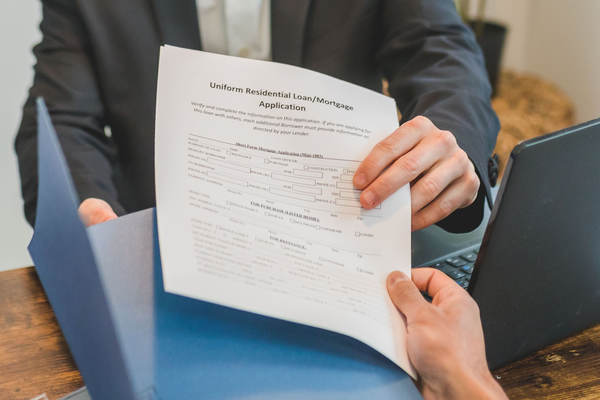
The Canada Small Business Financing Program sets no minimum time in business. Most Canadian banks set one anyway, and it usually lands at two filed years of financial statements. That gap is where first-year owners get stuck. The business is real, deposits land every week, and the application still comes back declined for being too new.
Startup business loans in Canada are available under 12 months in business, but the lender changes. Banks underwrite filed financials and time in operation. Alternative lenders underwrite deposits, so a business with three to six months of steady revenue can often qualify for revenue-based funding, equipment financing, or a government-backed CSBFP loan arranged through a bank or credit union.
The hard part isn't finding a lender. It's knowing which door to knock on first, because applying in the wrong order burns weeks and leaves credit inquiries behind you. Below is what each lender type checks in year one, the five funding routes realistically open to you, and how to build a file when you don't have a tax return for the business yet. If a bank has already turned you down, our guide on what to do after a bank decline covers the order to work in.
Can you get a startup business loan in Canada?
Yes, and the honest answer turns on one number: how many months of business bank deposits you can show. Time in business is a shortcut for risk. Every lender in the country uses it, and they set the bar in very different places.
Your first 90 days
With no deposit history, almost nothing gets underwritten on the business itself. What's available is credit that leans on you or on an asset: a CSBFP term loan through your bank, equipment financing where the equipment is the security, a small line of credit behind a personal guarantee, or a program through the Business Development Bank of Canada. The CSBFP deserves a phone call in month one. It covers up to $1.15 million in total, structured as up to $1 million in term financing plus up to $150,000 as a line of credit, and eligibility runs to businesses with gross annual revenues of $10 million or less. Our breakdown of what the CSBFP covers walks through the sub-limits.
Three to six months of deposits
This is where the door opens. Most alternative lenders in Canada want three to six months of business banking plus a monthly deposit floor. They aren't reading a business plan. They're reading your account: how often money lands, whether it's growing, how many days you spent below zero last quarter.
Six to twelve months of deposits
At six months with consistent revenue, most revenue-based products come into range, and pricing improves as you approach the one-year mark. Banks generally still won't move until you have two filed years behind you.
So the goal in year one isn't convincing a bank you're bankable. It's using the money that's available now to build the twelve months of clean records that make you bankable later.
What lenders check when you have no track record
Take away two years of financial statements and an underwriter has four things left to read. Call it the four-signal first-year file. Every one of these is something you control before you apply.
1. Deposit consistency, not deposit size
A business banking $18,000 a month across 40 deposits reads better than one banking $22,000 in two lumps. Consistency suggests repeat customers. Lumps suggest one big client, and client concentration is what makes a first-year file fragile. Days in overdraft matter more than most owners expect. Our guide on preparing bank statements for a business loan shows what gets flagged.
2. Your personal credit file
In year one the business has no credit identity of its own, so lenders read yours at Equifax Canada or TransUnion Canada. They look less at the score and more at behaviour: missed payments in the last 12 months, how much of your available revolving credit you're carrying, and whether a consumer proposal or collection is sitting on the file.
3. What you sell and how you get paid
Card-heavy businesses like cafés, salons and restaurants fit revenue-based products naturally, because repayment can follow daily receipts. A business paid on 60-day invoices is a different underwriting problem and often fits factoring better. Sector matters too. Construction, trucking and hospitality get read more cautiously when the economy slows.
4. Whether the business looks like a business on paper
Incorporation or a registered trade name, a business account kept separate from your personal chequing, GST/HST registration with the Canada Revenue Agency once you pass the small supplier threshold, and a lease or contracts in the business name. Honestly, the fastest way to lose a first-year application is running the whole operation through a personal chequing account. Nobody writes that rule down. But an underwriter who can't separate your grocery spending from your revenue stops reading.
None of these four cost money to fix. They cost about a month of discipline, which is why owners who plan their financing 60 days out get better answers than the ones who apply the week they run short.
Five ways to fund a business under 12 months old
Five routes realistically fund a Canadian business in its first year. They're listed roughly from cheapest and slowest to fastest and most expensive, and you can see how we structure each one on our business financing page.
| Option | Typical minimum | Speed | What it costs | Best when |
|---|---|---|---|---|
| CSBFP term loan (bank or credit union) | No minimum time in business, revenue under $10M | Several weeks | Capped by program rules, plus registration and admin fees | You're buying equipment, a vehicle, leaseholds or property |
| Equipment financing | Often 3 to 6 months, sometimes day one | Days to a week | Priced against the asset, which is the security | The money buys one specific machine or vehicle |
| Business line of credit or business card | 6 to 12 months, personal guarantee typical | Days to weeks | Interest on what you draw, plus fees | You need a buffer for gaps, not a lump sum |
| Home equity: HELOC, second or private mortgage | Based on the property, not the business | 1 to 3 weeks | Secured pricing plus lender and legal fees | You hold equity and want cheaper money than unsecured business credit |
| Revenue-based funding or merchant cash advance | Usually 3 to 6 months of deposits | 24 to 48 hours in many cases, for approved files | A factor rate, not an interest rate | Revenue is steady and timing matters more than price |
Two of these get misread constantly. The first is the merchant cash advance. It's priced with a factor rate, so a 1.25 factor on $50,000 means you repay $62,500 whether it takes six months or ten, and paying it out early doesn't save you money the way prepaying a term loan does. Work out the annualized cost before you sign anything. Our explainer on how factor rates actually work does the math, and Canada's maximum legal interest rate sets the outer boundary on what any lender here can charge.
The second is home equity. Owners resist it because it feels like betting the house on the business, and that instinct deserves respect. Still, a second or private mortgage secured against real property is usually cheaper than unsecured first-year business credit, and approval rests on the property rather than the age of the company. If you have equity and a repayment plan, it belongs on the list. If the plan is that sales should pick up, it doesn't.
Cost and speed pull against each other all year. The cheapest money is slow and paperwork-heavy, the fastest money carries the highest price, and the right choice is the cheapest option that still lands before the problem you're solving gets worse.
How to apply without a full year of financials
Five steps, in this order. Doing them out of order is what turns a two-week funding process into a two-month one.
1. Pull six months of statements properly
Download bank-generated PDFs covering complete statement periods. Screenshots and spreadsheet exports get sent back. If your banking is split across two accounts, pull both, because a lender who sees one account and hears about a second assumes the worst about the one they can't see.
2. Write the one-page revenue story
Underwriters stop on gaps. If July was slow because you closed for renovations, say so in a sentence. An unexplained dip gets priced as risk. An explained dip gets read as seasonality, and that difference can move an offer by thousands.
3. Check your own credit before a lender does
You can pull your consumer file from both bureaus at no cost. Correcting a reporting error takes weeks, so find it now instead of after a decline you didn't see coming.
4. Decide the amount, then tie it to a payback
"As much as I can get" is the most expensive answer in small business finance. Work out what the money produces: a machine that adds capacity, inventory that turns in 45 days, payroll that bridges a receivable you can point to. Borrow against that number.
5. Apply inside one window
Applications spread over four months look like a business getting steadily more desperate. The same applications inside a two-week window look like an owner shopping properly. Our process page sets out what happens once a file arrives, and the Solid Capital blog covers the documents lenders ask for at each stage.
Solid Capital is a Canadian alternative lender built for the files banks decline: business owners and homeowners with real revenue and a short or imperfect record. We read the whole file, bank statements, revenue history and business context, rather than stopping at a credit score, and a Canadian advisor reviews every application personally. If your business is generating revenue and you can show it, there's a real conversation to be had. Talk to a Solid Capital advisor. There's no impact to your credit to apply.
Year one is the hardest money you'll ever raise, and it gets easier every month you keep the records clean. The bank wants two filed years before it will look at you. Your deposits are already telling that story. Start reading them the way a lender does.
Frequently Asked Questions
Can you get a business loan with less than 6 months in business in Canada?
Sometimes. Most alternative lenders want three to six months of business bank deposits before funding on revenue alone. Under three months, the realistic options are equipment financing secured by the asset, a CSBFP loan arranged through a bank, or credit backed by a personal guarantee.
Do startup business loans in Canada require a personal guarantee?
In the first year, almost always. The business has no credit history of its own, so the lender relies on yours. A personal guarantee means you are personally responsible if the business cannot repay, which is why the amount you borrow should be tied to a specific payback plan.
How much can a business under one year old borrow in Canada?
Size follows deposits rather than age. Revenue-based funding is commonly sized against roughly one month of average deposits, so a business banking $30,000 a month is usually looking at an offer near that range. Government-backed CSBFP financing can go much higher, up to $1.15 million in total, because it is tied to the assets being purchased.
Does applying for a startup business loan affect your credit score?
It depends on the lender. Many alternative lenders, including Solid Capital, review an application with a soft pull, which does not affect your score. Banks generally run a hard inquiry, and several hard inquiries in a short period can pull a score down.
Is a merchant cash advance a good idea for a new business?
It can be, when the business has steady card or deposit volume and the funding solves a timing problem that pays for itself. It is priced with a factor rate rather than interest, so the total repayment is fixed and paying early does not reduce the cost. Compare that total against a term loan before signing.