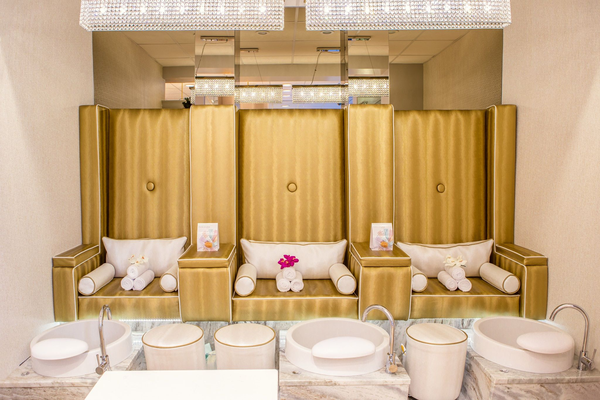
A salon owner in Laval with four chairs, two booth renters and a steady flow of card payments asks her bank for $60,000 to add a pedicure room. The bank says no. Her credit is fine and her sales are real. The problem is that her tax return shows a modest net income, most of her assets are bolted to a leased wall, and the bank's checklist has no box for either.
Salon and spa financing in Canada usually comes from five sources: equipment financing, a business term loan, a merchant cash advance, a business line of credit, or a government-backed loan through the Canada Small Business Financing Program. Banks lean on two years of tax returns, personal credit and hard collateral. Alternative lenders put more weight on what the salon produces each month: bank deposits, point-of-sale reports and recurring chair rent.
Why salon financing in Canada gets declined at the bank
Banks rarely explain a salon decline in writing. Ask enough questions, though, and the same three reasons keep coming up.
Your profit looks smaller than your business
Owners often pay themselves through draws and write off product, rent and education. That's smart tax planning. It also leaves a net income line that a bank's debt service formula reads as weak, even when deposits run well into five figures every month.
Your assets don't make good collateral
Styling chairs, shampoo bowls and a laser or facial machine lose resale value fast. Leasehold improvements stay with the landlord's building. A bank that wants real estate or receivables behind the loan sees very little it can take back.
Booth rent and commission splits confuse the file
Chair rent from independent stylists is genuine recurring income. Many bank underwriters treat it as noise because it doesn't look like a classic service sale. Tips and cash payments that never reach the account make it worse.
A salon with 12 months of steady card deposits and years left on its lease deserves a cash-flow review. A formula built around tax returns can't give it one.
Five salon and spa financing options compared
The right product depends on what you're buying and how quickly you need the money. Matching the term to the asset matters more than chasing the lowest headline number. Solid Capital's business financing page lists every product in one place.
| Option | Best for | What the lender focuses on | How you repay |
|---|---|---|---|
| Equipment financing or lease | Chairs, wash stations, lasers, facial and pedicure units | The equipment itself plus your deposits | Fixed monthly payments over the equipment's useful life |
| Business term loan | Renovations, a second location, buying out a partner | 6 to 12 months of bank statements and time in business | Fixed weekly or monthly payments |
| Merchant cash advance | Fast working capital when card sales are strong | Card and deposit volume | A percentage of daily sales |
| Business line of credit | Product orders, payroll gaps, slow months | Consistency of deposits | Interest only on what you draw |
| CSBFP loan through a bank | Leasehold improvements and equipment at bank pricing | Bank credit criteria and program limits | Term loan, up to 15 years |
Equipment financing
Because the machine secures the deal, equipment financing is often the easiest approval for a spa adding a laser or a salon replacing chairs. Compare a loan and a lease before signing, since buyout terms vary a lot. Our breakdown of equipment financing vs leasing walks through the trade-offs.
Term loans and lines of credit
A term loan suits one-time projects like a renovation. A line of credit suits recurring gaps, like stocking retail product before December or covering payroll in a slow January. Use the term loan for the build and the line for the bumps.
Merchant cash advance
A merchant cash advance is priced with a factor rate and repaid from daily card sales. It can fund quickly, but the effective cost climbs if you repay fast. Read how a factor rate compares to APR before you accept one.
Government-backed loans
Under the CSBFP, which is run by Innovation, Science and Economic Development Canada, a borrower can receive up to $1.15 million in total, with up to $500,000 for equipment and leasehold improvements. There's a 2% registration fee, and a bank still approves the loan using its own criteria. If your bank already said no, the program won't change its answer.
The 4-Point Salon File Check lenders run
An alternative lender starts with your deposits and works outward from there. For a salon or spa, four documents carry most of the decision.
- Six months of business bank statements. Lenders want steady deposits, few overdrafts and no unexplained gaps. Our guide to what lenders look for in bank statements shows the red flags.
- Point-of-sale and booking reports. Export monthly sales from your booking or POS software, split into services and retail. Deposits that match those reports build trust fast.
- Your lease. A lender wants the remaining lease term to cover the loan term. A lease ending in eight months makes a three-year loan hard to approve.
- Chair and booth rental agreements. Written agreements turn independent stylist rent into income a lender can count. Verbal deals usually don't count at all.
Two smaller items help too. Keep your GST/HST (or GST and QST in Quebec) remittances current with the Canada Revenue Agency, because tax arrears can rank ahead of a lender. And pull your personal credit report from Equifax Canada before you apply, so nothing in it catches you off guard.
A clean, matched file can cut days off a decision. A messy one costs you weeks.
What salon financing costs and how to apply
Cost depends on the product, your time in business and how consistent your deposits are. Any lender quoting a rate before seeing statements is guessing. What you can control is the comparison: look at the full dollar amount you'll repay, not just the rate or factor.
Mistakes that slow salon owners down
- Sending screenshots instead of full PDF bank statements, which most lenders can't verify.
- Mixing personal and business spending in one account, which hides real salon revenue.
- Taking a short, expensive advance to pay for a renovation that will take two years to earn back.
- Ignoring seasonality. Busy stretches like wedding season and December are often followed by slower months, so plan repayments around them. Our guide to seasonal business loans covers this.
The 5-step salon financing application path
- Decide exactly what the money is for and get quotes for equipment or renovations.
- Download six months of business bank statements as PDFs.
- Export matching POS or booking reports and gather chair rental agreements.
- Have your lease and photo ID ready.
- Apply, then answer the advisor's follow-up questions the same day if you can.
Solid Capital is a Canadian alternative lender for salon, spa and other small business owners who've been declined or under-served by big banks. A Canadian advisor reviews your deposits, booking reports, lease and chair rent, not just your credit score. You can start an application in about five minutes, applying won't affect your credit, and approved files are funded within 24 hours in many cases. Want to see each step first? Here's how the process works.
Your tax return shows what you kept. Your deposits show what the salon can carry, and that's the number worth bringing to a lender.
Frequently Asked Questions
Can I get salon financing in Canada with bad credit?
Yes, in many cases. Alternative lenders weigh recent bank deposits and card sales more heavily than your credit score, so a salon with steady revenue can often qualify even after a bank decline. Expect higher costs than a bank loan.
How long does a salon need to be open to get a business loan?
Many alternative lenders look for at least 6 to 12 months of operating history with consistent deposits. Banks usually prefer two or more years of filed tax returns. Equipment financing can sometimes work for newer salons because the equipment secures the deal.
Does chair or booth rental income count when applying for a loan?
It can, if it's documented. Written rental agreements and rent payments that land in your business account let a lender count booth rent as recurring income. Verbal arrangements and cash rent are much harder to verify.
Can I finance salon renovations through the CSBFP?
Yes. The Canada Small Business Financing Program allows up to $500,000 for equipment and leasehold improvements, with a 2% registration fee. A bank still approves the loan using its own credit rules.
Is a merchant cash advance a good idea for a salon?
It can work for short-term needs when card sales are strong, since repayment flexes with daily sales. It's usually a poor fit for long payback projects like renovations because the effective cost rises when you repay quickly.
What documents do I need to apply for spa or salon financing?
Plan on six months of business bank statements, POS or booking reports, your lease, any chair rental agreements, photo ID and quotes for what you're buying. Having these ready before you apply speeds up the decision.