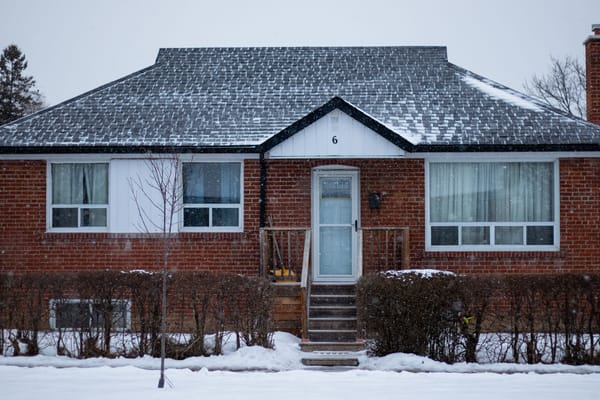
At 67, a retired teacher in Burlington, Ontario, can own a $900,000 house outright and still get turned down for a $100,000 home equity line of credit. The house has plenty of value. On paper, though, a pension and a CPP deposit don't cover the payments.
Reverse mortgage vs second mortgage is really a question about time and payments. A reverse mortgage suits homeowners 55 and older who plan to stay for many years and don't want monthly payments. The trade-off is a balance that grows every month. A second mortgage suits a shorter, defined need, like clearing debt or bridging to a sale, and it's approved mainly on your equity rather than your income.
Both options borrow against the same equity. Where they differ is cost over time, monthly payments and what's left for your estate. If you're also weighing a bank line of credit, our second mortgage vs HELOC comparison covers that side of the decision.
Reverse mortgage vs second mortgage: how each one works
A reverse mortgage is a loan secured against your principal residence that you don't repay month to month. Interest is added to the balance instead, and the whole amount comes due when you sell, move out for good, or the last borrower on title dies. In Canada the main lenders are HomeEquity Bank (the CHIP product) and Equitable Bank, and you generally need to be 55 or older to qualify.
How much you can borrow depends on your age, your home's appraised value, its location and the property type. The major lenders advertise a ceiling of up to 55% of the home's value, and younger borrowers usually get well below that. Any existing mortgage has to be paid off from the proceeds first. The Financial Consumer Agency of Canada publishes plain-language guidance on reverse mortgages that's worth reading before you sign anything.
A second mortgage is a separate loan registered behind your existing first mortgage. If your home is already paid off, the same private loan is simply registered as a first mortgage, and it works the same way. Terms are short (often one to two years), payments are monthly and frequently interest-only, and approval leans on your equity, your credit history and a clear plan to repay. Our guide to when a second mortgage makes sense and how to qualify walks through the approval side in detail.
| Feature | Reverse mortgage | Second mortgage |
|---|---|---|
| Minimum age | 55 or older | Any adult homeowner |
| Monthly payments | None required | Yes, often interest-only |
| What approval rests on | Age, home value, location, property type | Equity, credit history, exit plan |
| Typical borrowing limit | Up to 55% of home value (major lenders) | Many private lenders cap total borrowing near 75% to 80% of value |
| Term | No end date while you live there | Often one to two years |
| When it's repaid | Sale, permanent move, or death of the last borrower | End of term, by sale, refinance or payout |
| Effect on your estate | Balance grows, so less equity passes on | Balance stays flat if you pay the interest |
| Best fit | Staying put for a decade or more | A short, defined need with a clear way out |
In practice, a reverse mortgage costs you estate value, while a private second mortgage costs you a monthly payment for a set term.
What each option really costs over time
Reverse mortgage rates are usually lower than private second mortgage rates. The lower rate can mislead, because the total cost depends on how long the money stays borrowed.
How compounding changes a reverse mortgage
Take a $150,000 reverse mortgage and a hypothetical 7% rate, used here only to show the math. With no payments, interest compounds on interest. After 10 years the balance is roughly $295,000, nearly double what you took out.
The major reverse mortgage lenders advertise a guarantee that you or your estate won't owe more than the home's fair market value at sale, as long as you keep to the loan terms. That protects your heirs from a bill, but the equity they inherit can still be far smaller than they expected.
How a second mortgage costs out
Now take the same $150,000 as a private second mortgage at a hypothetical 10%, again just for illustration. Interest-only payments run about $1,250 a month, or $15,000 over a one-year term, plus lender and broker fees. Our breakdown of private mortgage fees in Canada shows what those typically include. The balance stays at $150,000, and it's cleared when you sell or refinance.
Comparing rates alone won't tell you which is cheaper. Compare what each option costs over the period you'll actually hold it.
For a two-year need, a short loan usually costs less overall. For a twenty-year plan, a reverse mortgage is often the more realistic fit.
Why banks turn down retirees for a HELOC
Most retirees who end up comparing these two products started at their own bank. They asked for a home equity line of credit and got a no, even with plenty of equity.
The problem is usually income. Under Guideline B-20 from the Office of the Superintendent of Financial Institutions, federally regulated lenders cap the revolving HELOC portion at 65% of your home's value and must qualify you at a stress-test rate. Your total debt service ratio is then measured against pension, CPP, OAS and RRIF income, which is often a fraction of what you earned while working. Our explainer on GDS and TDS debt service ratios shows how that math catches people.
Many retirees are surprised that a house worth close to a million dollars carries less weight than a pension statement.
Private lenders aren't regulated by OSFI, so the federal stress test doesn't bind them. In Ontario, the brokerages that arrange these loans are licensed by the Financial Services Regulatory Authority of Ontario, and other provinces have their own regulators. That's why a private second mortgage can be approved on equity and a credible exit plan when a bank HELOC can't.
If income is what the bank flagged, a lender that underwrites on equity may still approve you.
The 4-question retirement equity test
Four questions settle this for most homeowners. Answer them honestly before you talk to any lender.
1. How long will you stay in the home?
If the answer is 10 years or more, a reverse mortgage starts to make sense. A shorter stay means paying setup costs and early prepayment charges built for a long-term loan. On the major lenders' closed products, those charges are highest in the first few years.
2. Is the need one-time or ongoing?
A lump sum to clear credit cards, pay a tax bill or help a child with a down payment fits a second mortgage. A steady top-up for home care or living costs over many years fits a reverse mortgage.
3. Can you cover a monthly payment comfortably?
A second mortgage needs interest paid every month. If that payment would squeeze your budget, a reverse mortgage's no-payment structure is the safer fit, even at a higher long-term cost.
4. What do you want to leave behind?
If passing the house on matters to you, a short-term second mortgage that gets paid out at sale protects more of that equity. Talk it through with your family, and get independent legal advice either way.
Consider a 71-year-old widow in Laval wants $60,000 to pay off credit card debt and help her son buy a condo, and she plans to sell and downsize within 18 months. That's a second mortgage, with the sale as the exit strategy. Her 79-year-old neighbour wants to stay until the end and needs about $1,500 a month for home care. That's a reverse mortgage.
Our view: if you're selling within two years, a reverse mortgage is the wrong tool.
Solid Capital is a Canadian alternative lender offering second and private mortgages to homeowners the big banks have turned down, including retirees whose income looks thin on paper. We read the whole file (your equity, your credit history, your plan to repay) instead of stopping at a debt ratio. If a short-term second mortgage fits your situation, start an application with Solid Capital. It takes about five minutes, there's no impact to your credit to apply, and a Canadian advisor reviews every file personally.
Both products turn a paid-down house into cash. They differ on who pays, and when. Choose the one that matches your timeline, even if its rate is higher.
Frequently Asked Questions
Can I get a second mortgage if I'm retired?
Yes. Private lenders focus mainly on your home equity, your credit history and how you'll repay at the end of the term, so retirees with solid equity are often approved even when a bank declines them on income. You'll need a realistic exit plan, such as selling, downsizing or refinancing.
How much can I borrow with a reverse mortgage in Canada?
The major Canadian lenders advertise up to 55% of your home's value. The actual amount depends on your age, the appraised value, the location and the property type, and older borrowers generally qualify for more. Any existing mortgage must be paid off from the proceeds.
Does a reverse mortgage affect my OAS or GIS?
Reverse mortgage money is a loan, not income, so it generally isn't taxed and doesn't reduce Old Age Security or the Guaranteed Income Supplement. Confirm how it applies to your situation with your accountant before you sign.
Can I pay off a reverse mortgage early?
Yes, but closed reverse mortgages usually carry prepayment charges, and they tend to be highest in the first few years. Some lenders allow limited penalty-free prepayments each year. Read the prepayment section of the contract before signing.
Is a second mortgage riskier than a reverse mortgage?
The risks are different. A second mortgage needs monthly payments and has a payout date, and missed payments can lead to enforcement. A reverse mortgage has no payments, but you must keep property taxes, insurance and maintenance current, and your equity shrinks as interest compounds.