A software developer landed in Mississauga in March, started a $138,000 job in May, and had 20% of a down payment saved by September. Two banks declined him in the same week. His income was never the issue. His Canadian credit file was four months old, and Equifax Canada had not produced a score for it yet.
You can buy a home here with no Canadian credit history. There are two routes. One is an insured newcomer program through CMHC, Sagen or Canada Guaranty, all of which accept alternative proof that you pay your bills. The other is an equity-based mortgage from an alternative or private lender, which is where most declined newcomers end up. Neither one asks your home country's credit bureau for anything, because that data does not cross the border.
Four things follow. Why strong income still gets declined at a bank. What the insured newcomer programs actually allow in 2026. The five documents that stand in for a credit score. And how to move to a cheaper lender once your file has some age on it. If you are self-employed as well as new here, read this beside our guide to a self-employed mortgage in Canada.
Why newcomers with no Canadian credit history get declined
Your credit history does not travel. Equifax Canada and TransUnion Canada record what happens inside Canada and nothing else, so twenty years of clean mortgage payments in Manila, Lagos or Warsaw reads here as a blank page. Your Canadian file is only created the first time a lender pulls your report. The score arrives later, usually after three to six months of reported activity at Equifax. TransUnion often generates one sooner, and it starts low because there is no history sitting behind it.
That gap is a problem because bank underwriting is built around a number. A branch adviser can hold your pay stubs, believe every word you say, and still be unable to submit the file, because the system wants a score, two years of Canadian income, and ratios that survive the stress test.
The stress test does not care that you just got here
Under OSFI Guideline B-20, federally regulated lenders have to qualify you at the greater of your contract rate plus two percentage points or 5.25%. You are approved on a payment you will never actually make. Newcomers take that hit twice, because foreign employment and foreign rental income are usually left out of the ratios while foreign debts still count against you. If that is where your application came apart, our guide on what to do after you failed the mortgage stress test covers the next moves.
Four reasons a newcomer file dies at the bank
- The credit file is younger than six months, or holds one account and no score
- Employment is still inside a probation period, or the income is contract, commission or self-employed
- The down payment arrived from overseas and cannot be traced back ninety days
- Status is a work permit rather than permanent residence, and internal policy stops there
Look at that list again. Not one of those is a credit problem. They are documentation problems wearing a credit problem's coat.
Insured newcomer programs: what CMHC and Sagen allow in 2026
If your down payment is under 20%, the mortgage has to be insured, and all three Canadian insurers run a newcomer program. CMHC Newcomers is open to permanent residents and to non-permanent residents with legal authorization to work in Canada, with no minimum period of residency required. The down payment starts at 5%. At least one borrower or guarantor needs a credit score of 600 or better, and where Canadian credit history is thin, CMHC may accept alternative proof instead: an international credit report, or twelve months of rent and utility payments. Non-permanent residents can generally be insured up to 90% of the value of a one-unit, owner-occupied home.
Sagen and Canada Guaranty run their own versions of this. Sagen's New to Canada program expects a valid work permit or permanent residence plus roughly three months of full-time Canadian employment, with corporate relocations handled differently. Most insurers treat you as a newcomer for five years from the date you arrived.
What the down payment has to be
On an insured purchase the minimum is 5% of the first $500,000 and 10% of the portion between $500,000 and $1.5 million. Past $1.5 million there is no insurance available at all, which puts you into 20% down and uninsured bank rules. On a $700,000 house in Brampton, that is $25,000 plus $20,000, so $45,000 before a dollar of closing costs.
The rule newcomers trip over
The Prohibition on the Purchase of Residential Property by Non-Canadians Act runs until January 1, 2027. It blocks non-Canadians from buying residential property inside census metropolitan areas and census agglomerations, with exceptions that include certain work permit holders who meet residency and tax-filing conditions, and purchases made together with a spouse who is a citizen or permanent resident. Permanent residents are not caught by it. If you are here on a permit, confirm your exemption with a real estate lawyer before you write an offer.
Three routes, side by side
| Route | Down payment | Canadian credit needed | Best for |
|---|---|---|---|
| Insured newcomer program | From 5% | 600+ for one borrower, or alternative payment history | Salaried buyers with PR or a permit and traceable savings |
| B lender | 20% and up | Some Canadian history, more flexible on income proof | Thin files with provable income and time to wait |
| Private mortgage | Usually 20% to 35% | None required, equity carries the file | Declined files, self-employed, foreign income, fast closings |
Our breakdown of A lenders, B lenders and private lenders explains how the pricing changes as you move down that table. The insured route costs less. The private route reads your file differently and closes faster. Choose the one that can actually fund by your closing date.
The 5-Document Newcomer File alternative lenders read
Alternative lenders start with the file itself and treat the score as secondary. Here is what a Canadian advisor actually wants in front of them, and the list is the same whether you flew in from Dubai or Dublin. Call it the 5-Document Newcomer File.
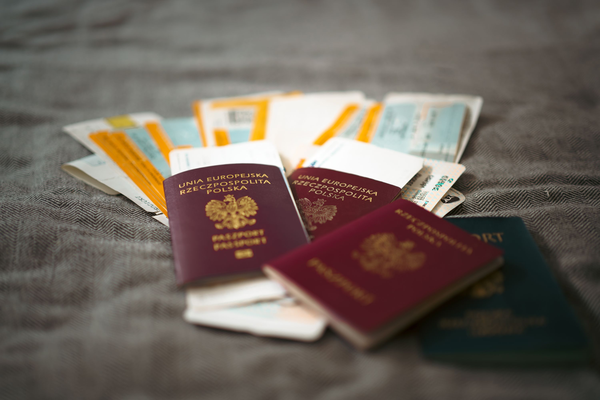
- Status and identity. Passport plus PR card or work permit, with the expiry date visible. A permit with eight months left tells a very different story than one with three years left.
- Income proof. An employment letter showing start date, salary and probation status, plus two recent pay stubs. Contract or self-employed: bring the contracts, the invoices, and the deposits that match them.
- Canadian bank statements. Three to six months, every page, showing pay landing and rent leaving. This is the most persuasive document a newcomer owns.
- The down payment trail. Ninety days of history on the funds, a gift letter if family sent money, and the wire records if it came from abroad. Money that appears with no story stalls the file at the lawyer's office.
- Substitute credit. Twelve months of rent receipts or a letter from your landlord, utility and phone bills in your name, and an international credit report if your home country issues one.
What an underwriter is really checking
Two things. Can you carry the payment, and can the money be followed. A file showing six months of salary deposits and rent paid on the first of every month answers both questions without a score being involved at all.
Honestly, the files that get approved are the boring ones. Clean statements, rent paid on time, a down payment anyone can trace. A big salary impresses nobody if the money cannot be followed.
A credit score is just a summary of a story. When the summary is missing, bring the story.
Costs, and your exit to a cheaper lender
An equity-based mortgage prices risk differently than a bank does. The lender looks at the property, the equity sitting behind the loan, and whether there is a believable way out. Expect a shorter term, often one year, an appraisal, legal fees and a lender or broker fee, and a rate above what an insured borrower pays. That is the trade for a file the bank could not read. If you want the numbers side of it, we covered how much equity a private mortgage needs in a separate guide.
The exit is the whole point
For a newcomer, a private mortgage is a bridge. You cross it and you leave. Twelve to twenty-four months of clean Canadian payments changes what you qualify for. Your Equifax file matures, probation ends, your first Canadian tax returns exist, and the ratios finally work. Then you refinance into a B lender or back into a bank. Plan that move on the day you sign rather than in month eleven, and read our private mortgage exit strategy guide first.
Solid Capital is a Canadian alternative lender for borrowers the banks decline or under-serve, and newcomers with thin credit files are a large part of that group. Our underwriting reads the whole file, the bank statements, the income history and the story behind the down payment, rather than stopping at a credit score, and a Canadian advisor reviews every application personally. If a bank has already said no, look at how a private mortgage works, or start an application. It takes about five minutes and there is no impact to your credit to apply.
Being new to Canada is not the same as being new to money. You paid rent somewhere. You ran a household somewhere. The bureau simply has not caught up. The right lender reads the file, not the calendar.
Frequently Asked Questions
Can I get a mortgage in Canada with no Canadian credit history?
Yes. Insured newcomer programs from CMHC, Sagen and Canada Guaranty accept alternative proof of payment history, such as an international credit report or twelve months of rent and utility payments. Private and alternative lenders go further and qualify you on equity and provable income rather than a score.
How long does it take to get a credit score in Canada as a newcomer?
Your credit file is created the first time a Canadian lender pulls your report. Equifax Canada generally needs three to six months of reported activity before a score appears. TransUnion Canada often produces one sooner, and it starts low because there is no history behind it. Your credit record from another country does not transfer.
Can a work permit holder buy a home in Canada in 2026?
In many cases, yes. CMHC insures non-permanent residents who are legally authorized to work in Canada, up to 90% of the value of a one-unit owner-occupied home. The Prohibition on the Purchase of Residential Property by Non-Canadians Act still runs to January 1, 2027, with exceptions for certain permit holders, so confirm your position with a real estate lawyer before making an offer.
How much down payment does a newcomer need in Canada?
On an insured purchase, 5% of the first $500,000 and 10% of the portion between $500,000 and $1.5 million. Above $1.5 million no mortgage insurance is available, so plan on 20% or more. Private lenders typically want 20% to 35% equity in the property.
Does foreign income count for a Canadian mortgage?
Usually not at a bank. Federally regulated lenders generally exclude foreign employment and foreign rental income from the debt service ratios while still counting foreign debts against you. Alternative lenders can be more flexible when those deposits are visible in a Canadian bank account.
Will a private mortgage hurt my chances of getting a bank mortgage later?
No, as long as you pay it as agreed and plan the exit from day one. Twelve to twenty-four months of on-time Canadian payments builds exactly the history a bank wants to see at refinance. The risk is not the private mortgage. It is signing one without an exit plan.