
Ask a Canadian lender what they read before your credit report and most will give the same answer: your last six months of bank statements. Preparing them well is straightforward. Pull six complete, unedited months, separate business from personal banking, clear NSF charges, keep balances positive, and be ready to explain unusual deposits.
This applies whether you're going to a big bank or to an alternative lender for business financing. Statements are the closest thing a lender gets to watching your business operate in real time. Your credit score is a summary. Your statements are the evidence.
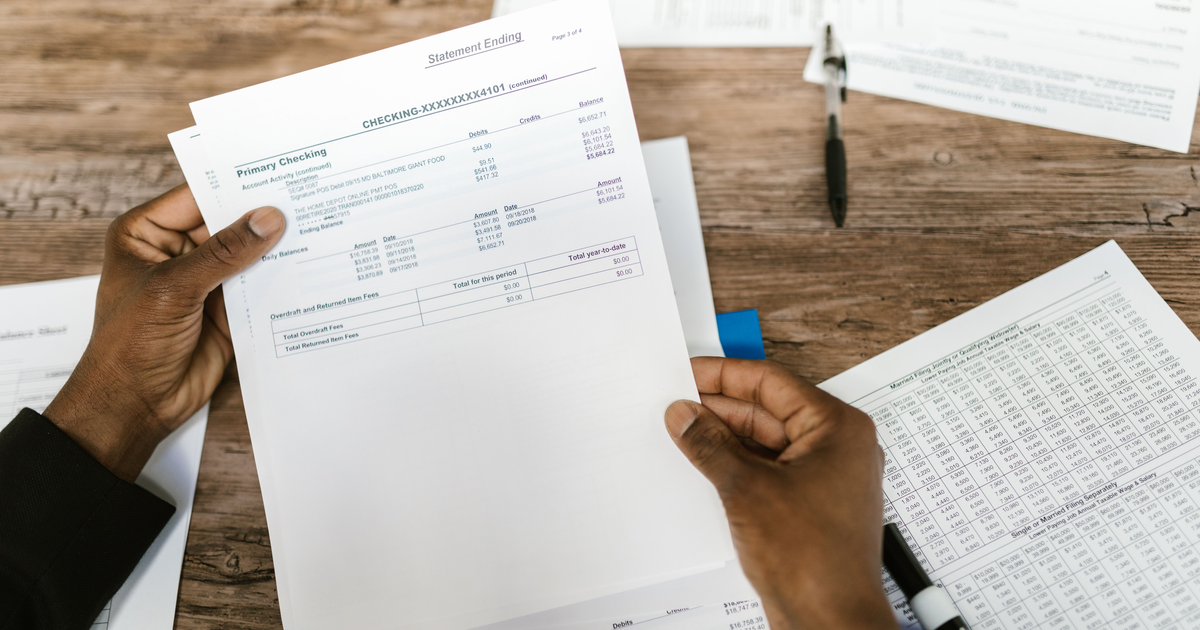
Here's how to get yours application-ready, step by step.
What lenders look for in your bank statements
Every underwriter reads statements with the same four questions in mind. Does money come in regularly? Does enough of it stay in the account? Do payments bounce? And can this business afford one more obligation?
Deposit consistency matters more than deposit size. A business landing $28,000 every month looks stronger than one that swings between $60,000 and $5,000, even though the second earns more on paper. Lenders price predictability.
Average daily balance is the second signal. If your account touches zero between deposits, a lender assumes a new payment would push you into overdraft. So what counts as a red flag? NSF charges top the list, because each one is proof that a payment already failed.
Credit-score-first lenders stop there. Cash-flow lenders go further and read the whole operating picture, which is why it helps to know what alternative lenders look at instead of your credit score before you apply. Same statements. Very different reading.
The 6-Point Bank Statement Checklist
Work through these six items before you submit anything. Most take minutes. One takes a couple of months, which is exactly why you should start now.
- Pull six full months, unedited. Download official PDFs directly from your online banking, from the first day of the month to the last. Partial months and transaction exports look incomplete and slow down review.
- Separate business and personal banking. If rent, groceries, and supplier payments share one account, your real revenue is buried. Open a dedicated business account and give it at least a few clean months before applying.
- Clear NSF charges and overdrafts. Aim for 60 to 90 days with zero bounced payments before you submit. Recent NSFs hurt far more than old ones.
- Keep every closing balance above zero. A small daily buffer, even a few hundred dollars, tells the lender a new payment won't break the account.
- Document unusual deposits. A family loan, an equipment sale, or an insurance payout should come with a one-line explanation. Unexplained lump sums get discounted or questioned.
- Match your statements to your Canada Revenue Agency filings. If your statements show revenue your tax returns don't, expect hard questions. Consistency across documents is what makes a file credible.
Six items. That's the whole job.
Mistakes that quietly get applications declined
Most declined files don't fail on revenue. They fail on presentation and timing, and both are fixable.
The worst mistake is editing statements. Cropping out an NSF charge or deleting a transaction line isn't tidying up, it's misrepresentation, and verification catches it almost every time. A weak month explained honestly is workable. A doctored PDF ends the conversation.
Screenshots come next. A photo of your banking app is not a statement, and submitting one signals you didn't take the application seriously. The same goes for hiding a second account: lenders can see transfers to it, and an undisclosed account raises more doubt than whatever it contains.
Then there's timing. Honestly, waiting one strong month before you apply does more for your file than anything else on this list, and almost nobody does it. Applying the week after your slowest month puts your worst numbers on top of the pile. If your credit is also bruised, read our guide on getting a business loan with bad credit in Canada before you submit anything. Sequence matters.
How alternative lenders read your statements differently
A caterer in Laval with $35,000 in steady monthly deposits and a 610 credit score gets two very different receptions. At a bank, the score often ends the conversation before the statements are opened. At a cash-flow lender, those deposits are the conversation.
Alternative underwriting starts with the statements and works outward: revenue pattern, balance behaviour, existing obligations, then business context. A past rough patch matters less than what the last six months prove. You can see how that review works in practice on our process page.
Solid Capital is a Canadian alternative lender built around that reading. Advisors review the full file personally, bank statements, revenue history, and business context, not just the score, for business owners and homeowners the big banks have declined or under-served. If your statements tell a solid story, start an application. It takes about five minutes and there's no impact to your credit to apply.
Prepare the six months. Fix what you can fix. Then apply from strength.
Frequently Asked Questions
How many months of bank statements do I need for a business loan in Canada?
Most Canadian lenders ask for three to six months of business bank statements. Alternative lenders usually want six, because they underwrite from cash flow rather than from the credit score alone. Always submit complete months, not partial ones.
Do NSF charges hurt a business loan application?
Yes. An NSF charge tells the lender your account ran out of money when a payment came due, which is exactly the risk they are pricing. One old NSF rarely sinks a file, but several recent ones will. Aim for 60 to 90 clean days before applying.
Can I use personal bank statements for a business loan?
Sole proprietors who run everything through one account can sometimes use personal statements. Incorporated businesses should always submit business account statements. Mixing the two makes revenue harder to verify and weakens the file.
Should I explain large deposits before the lender asks?
Yes. Add a short note for anything unusual, such as an equipment sale, a family loan, or an insurance payout. An unexplained deposit gets treated as one-time income at best and a red flag at worst, and neither helps your application.
Do lenders verify bank statements in Canada?
Most do. Many lenders now confirm transactions through secure read-only bank connections, and others request statements directly from your bank. Edited or cropped statements are treated as misrepresentation, so always submit originals.