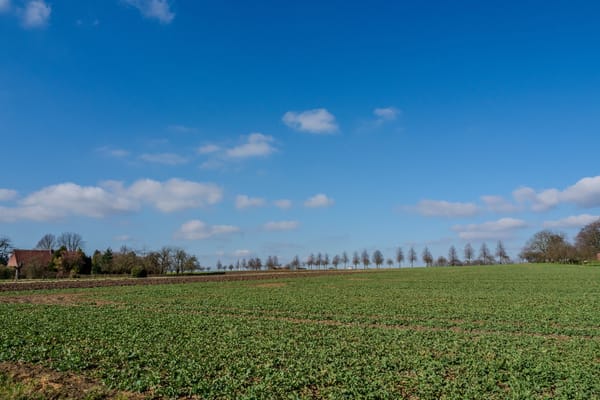
A builder in Barrie found a 4-acre parcel listed at $480,000, took it to two banks, and got the same answer twice: we don't lend on land.
A land loan is a mortgage registered against a vacant parcel instead of a house. Because bare land produces no rent, no cash flow, and no dwelling to insure, lenders advance a smaller share of the price and ask for more money down. Raw acreage commonly needs 35% to 50% down. A serviced, build-ready lot usually needs less.
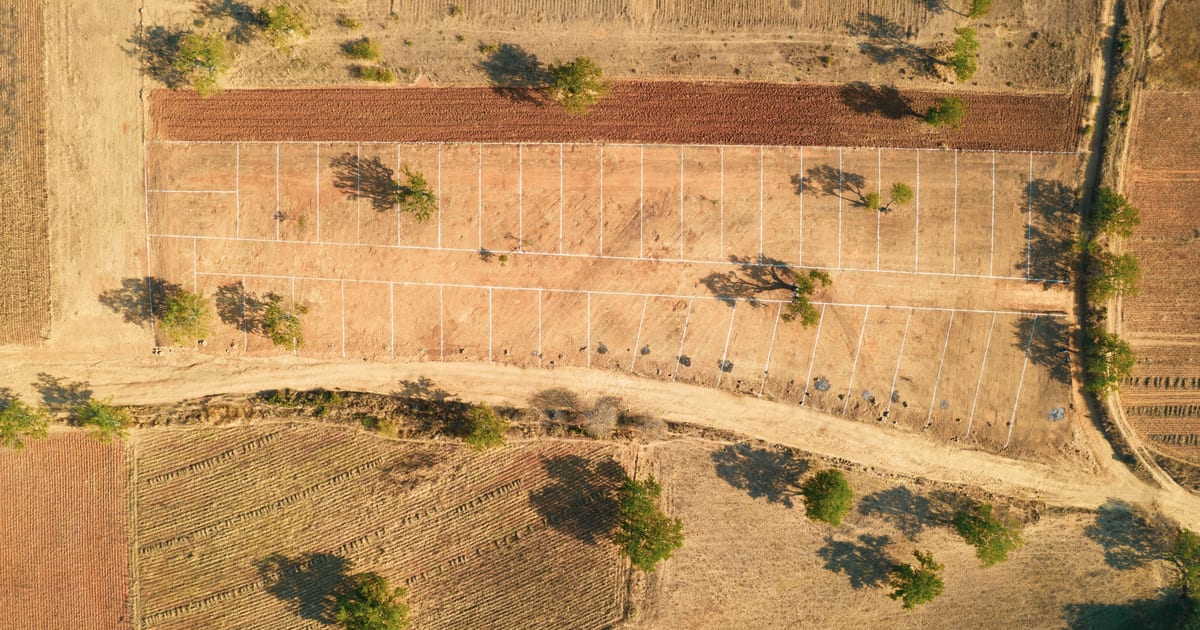
The gap between what a bank will fund and what land actually costs is where private lenders work. Zoning, legal access, servicing, and a credible repayment plan carry a land file. Your credit score sits further down that list than you would expect. If you already have a parcel in mind, Solid Capital's land loan financing page shows what we fund.
Why banks decline land loans in Canada
Land fails bank underwriting for reasons that have very little to do with the borrower. A house shelters a family or generates rent, and it sells to a wide pool of buyers. A vacant parcel sits there, costs money to hold, and appeals to a much smaller pool. If a lender ever has to sell it, that takes longer and the price is harder to predict.
Three structural problems show up on almost every land file:
- There is no insurable dwelling. CMHC mortgage loan insurance applies to residential properties with a home on them, so a bare parcel has no insured route to a small down payment.
- Value is harder to substantiate. Federally regulated lenders work under residential mortgage underwriting expectations set by OSFI, which include supporting a property's value and its marketability, and comparable sales for six rural acres with no services are thin.
- Permitted use is uncertain. Zoning, legal access, and servicing decide what can actually be built, and a parcel zoned agricultural does not become a residential lot because the buyer intends to build a house on it.
The bank land programs that do exist are usually narrow. Some are restricted to existing clients. Some only fund lots where construction starts within months. Many stop at a loan-to-value ceiling low enough to leave a buyer short at closing, which is how a pre-approval turns into a scramble two weeks before the deposit goes firm.
So a decline on land is rarely a verdict on you. It's a verdict on the security. Once you see it that way, the fix stops being "improve my credit" and starts being "prove the parcel."
What lenders check before financing a parcel
Every land lender, bank or private, works through the same short list before pricing anything. What kind of land is this, what can legally be done with it, what is it worth, and what pays the loan back?
Land type drives the down payment
Down payment expectations move more with the land type than with the borrower. The ranges below reflect common market practice rather than any one lender's rules, and a specific parcel can land outside them:
| Land type | Typical down payment | What the lender focuses on | Common structure |
|---|---|---|---|
| Raw or unserviced acreage | 35% to 50% or more | Legal access, zoning, marketability, holding plan | Short-term private mortgage |
| Vacant serviced lot | 25% to 40% | Utilities at the lot line, build timeline | Land loan rolling into a construction mortgage |
| Development land with approvals | 25% to 40% | Approvals in hand, project budget, takeout lender | Private or mortgage investment corporation (MIC) financing |
| Farmland | Often 10% to 20% for qualifying farmers | Farm income, soil and water, operator experience | Farm loan or federally guaranteed loan |
Farmland runs on its own track. Under the Canadian Agricultural Loans Act program, the federal government guarantees 95% of a lender's net loss on an eligible farm loan, with up to $500,000 available for a land purchase and repayment terms as long as 15 years. If the parcel is a working farm, ask a bank or credit union about that program before you assume private money is the only option.
For everything else, three items decide whether a file is workable at all:
- Legal access has to show on title. A parcel reached only by crossing someone else's property is a problem, not a footnote.
- Zoning is read as it stands today. Lenders fund what the designation permits now, not what a rezoning application might permit in three years.
- Servicing changes the arithmetic. Hydro, water, and septic capacity move both the appraised value and the loan-to-value a lender will consider.
Then comes the question that actually decides a private land file: what pays this loan out? A sale, a construction mortgage, a refinance once services go in, or income from elsewhere. Honestly, if you have real equity going in and a credible plan for the parcel, one bank's decline tells you almost nothing about whether the deal is fundable. A good share of our private mortgage files start exactly there.
The 4-step land financing path
Land deals move through four stages. Working them in this order is what keeps a purchase from stalling at the closing table.
- Confirm zoning and access before your conditions expire. Call the municipality, pull the zoning designation, and confirm registered access on title. It is a two-day job that prevents a two-month problem.
- Document the value and the intent. Order an appraisal from someone who has actually valued land in that area, then write your plan down: hold, service, subdivide, or build, with dates attached. Lenders fund plans with dates far more readily than plans with hopes.
- Match the term to the plan, not to the payment. A 12-month term on a parcel that needs three years of approvals is a refinance you will be forced into. Short-term land money works best as bridge financing with a defined end date.
- Line up the takeout before you need it. Know which lender replaces this loan and what that lender will ask for. If the takeout is a construction mortgage, get its conditions in writing while you still have time to satisfy them.
What does that look like in practice? A buyer taking a serviced lot in Kelowna with a spring build start wants a 12-month land loan and a construction takeout already discussed. Someone buying rural acreage near a growth corridor wants a longer runway and a hard number for carrying costs. Same product, two different structures. Our application process page covers what an advisor asks for on a land file.
Sequence is the whole game here. Buyers who go firm before confirming access are the ones who lose deposits.
Carrying costs and the exit mistake that kills land deals
Land is the only real estate that bills you every month and pays you nothing. Interest, property taxes, insurance, and basic upkeep all run while the parcel does nothing at all. On short-term land financing, interest is usually priced off the prime rate, which moves with the Bank of Canada policy rate, so a variable structure means your carrying cost moves as well.
Budget the holding period, not just the purchase. Two years of interest, taxes, and insurance on a $400,000 parcel is real money, and it is the line most first-time land buyers leave off the spreadsheet.
Where land files actually go wrong
- Treating a rezoning as a formality. Municipal timelines run on their own calendar, and a refusal is always on the table.
- Ignoring a landlocked title. No legal access means almost no lender, at almost any price.
- Underestimating closing costs. Appraisal, legal fees, lender fees, and land transfer tax all arrive at once.
- Booking a term shorter than the plan. This is the big one, and it is why a clear exit strategy matters more on land than on any other mortgage.
How carrying costs get treated at tax time is a separate conversation, and one for your accountant rather than your lender. The Canada Revenue Agency treats land held for development differently from land held for personal use, and that difference can change your real cost of holding.
Solid Capital is a Canadian alternative lender built for files like this one. We read the whole picture, the parcel, the equity, the plan, and the exit, rather than stopping at a credit score, and most of our borrowers reach us after a bank or credit union has already passed. If you are sitting on an accepted offer and a decline, start an application. About five minutes, no impact to your credit to apply, and a Canadian advisor reviews every file personally.
Banks underwrite buildings. Land needs a lender willing to underwrite a plan. Bring the zoning, the access, an appraisal, and a realistic exit, and a parcel two banks turned down can close in weeks. The parcel never changes. The lender does.
Frequently Asked Questions
Can you get a mortgage on vacant land in Canada?
Yes, though it works differently from a home mortgage. Most banks either decline vacant land or limit it to existing clients with immediate construction plans, so much of this lending is done by private lenders and mortgage investment corporations that price on the parcel and your equity. Expect a larger down payment and a shorter term than a residential mortgage.
How much down payment do you need for a land loan in Canada?
It depends on the land type. Raw or unserviced acreage commonly needs 35% to 50% down, while a serviced, build-ready lot can sometimes be financed with less. Farmland arranged at a bank under the Canadian Agricultural Loans Act program can require considerably less for qualifying farmers.
How long is a typical land loan term?
Private land mortgages are usually short, often 6 to 24 months, and frequently interest-only. The term is meant to cover a defined stretch of time: securing approvals, servicing the lot, or reaching a construction start. The exit date matters more than the length of the term itself.
Can a land loan turn into a construction mortgage?
Often yes, if it is planned that way from the start. The construction lender sets its own conditions on plans, permits, budgets, and builder qualifications, so confirm those requirements while the land loan is still being arranged instead of after it funds.
Does bad credit stop you from getting a land loan?
Not on its own. Private land lending leans on the parcel's value, your equity, and a credible exit, so credit is one input rather than the deciding one. A weak parcel with clean credit is usually a harder file than a strong parcel with bruised credit.
Is farmland financed differently from residential land?
Yes. Farmland is underwritten as an agricultural asset, with attention to farm income, soil and water, existing infrastructure, and the operator's experience. Federally guaranteed options such as the CALA program are available through banks and credit unions for qualifying farmers, with up to $500,000 for a land purchase.