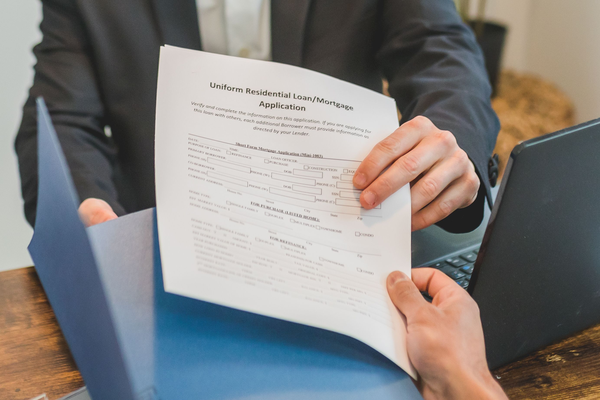
Getting declined for a business loan by your bank can feel like a dead end. In Canada, it's not.
Every year, thousands of Canadian small business owners walk out of their bank with a rejection and assume the story is over. It's not. The bank's underwriting model is one filter, built around credit scores, tax filings, and two years of audited financials. Businesses that fall outside that filter, many of them healthy and revenue-generating, have other options. Real ones.
This guide explains what to do after a bank decline: what the rejection actually means, where to apply next, and what to put together before you do.
What a bank decline actually tells you
A bank decline is not a verdict on your business. It's a signal that your file doesn't fit their automated underwriting criteria.
Canadian chartered banks assess applications against a standard checklist: credit score above a set threshold (often 680+), two years of tax returns showing consistent net income, no recent missed payments, at least two to three years in business, and sufficient collateral. If any box is unticked, the file gets flagged. A decline goes out.
A contractor in Hamilton whose revenue doubled this year but whose returns don't reflect it yet. A restaurant owner in Winnipeg who took out a personal credit line during COVID and hasn't fully paid it down. A self-employed consultant whose reported income looks lower than actual cash flow because of legitimate deductions. None of these are bad businesses. They're just not bank-shaped.
When you see "declined," ask for specifics. Banks are required under the Financial Consumer Agency of Canada framework to provide reasons on request. Get it in writing. It tells you exactly which part of your file to address before your next application.
Why alternative lenders approve what banks decline
Alternative lenders use a different model. Instead of running your file through a credit score filter and stopping there, they read the whole picture.
Bank statements (typically three to six months), actual revenue history, the nature of your business, your industry's payment cycles, your capacity to service debt based on real cash flow, not just what your T1 General reported. A business depositing $40,000 a month but carrying a 620 credit score from an old personal balance looks very different to an alternative lender than it does to a bank.
OSFI regulations require federally regulated lenders to apply strict stress-test standards and capital-adequacy rules. Those rules exclude a broad segment of viable borrowers. Alternative lenders, operating outside that framework, carry the risk differently. That's why they can say yes where banks say no.
Honestly, if your business has been generating consistent revenue for 12 months or more, you shouldn't have to take a bank's "no" as a final answer.
What to prepare before you apply
Applying to an alternative lender is faster than applying to a bank. But the quality of what you bring matters. Stronger file, better outcome.
The 4-Point Alternative Lending Readiness Checklist
1. Three to six months of business bank statements. This is the primary underwriting document. Lenders want to see consistent deposits, manageable NSFs, and no sudden drops in volume. If your deposits are strong, this is your best argument.
2. Your most recent Notice of Assessment (NOA) from the Canada Revenue Agency. Confirms you're current on taxes. An outstanding CRA balance is a flag. If you have one, address it or disclose it upfront.
3. Three to six months of credit card processing statements (if applicable). For businesses with significant card revenue, this supplements your bank statements and directly supports merchant cash advance eligibility.
4. A short description of your business and why you need the capital. Not a business plan. Two or three sentences explaining what the money is for and how it gets repaid. Lenders who review files personally find this useful context, especially for non-standard situations.
No audited financials required. No two years of tax returns. You need to show revenue.
Which type of financing fits your situation
Not every product fits every situation. Here's a plain-language breakdown to narrow it down.
| Situation | Product | Typical timeline |
|---|---|---|
| Need working capital quickly; business processes cards or receives regular deposits | Merchant Cash Advance | 24-48 hours in many cases |
| Need a fixed amount with predictable repayments over 6-24 months | Business Term Loan | 1-3 business days in many cases |
| Need flexible access to capital for recurring cash flow gaps | Business Line of Credit | 2-5 business days for approved files |
| Have unpaid invoices from clients and need cash now | Invoice Factoring | 24-48 hours in many cases |
| Own property and need equity access without refinancing your first mortgage | Second Mortgage or HELOC | 5-10 business days for approved files |
For business owners who also own property, a second mortgage or private mortgage is sometimes the most cost-effective route to larger capital. Worth understanding all the options before assuming a business loan is the only path.
To understand the full application process, see how Solid Capital reviews your file. You can also review all available business financing options to see what fits your situation before you apply.
If your business is generating revenue and you can show it, there's a real conversation to be had. Talk to a Solid Capital advisor. There is no impact to your credit to apply, and a Canadian advisor reviews every file personally.
17Frequently Asked Questions
Can I get a business loan in Canada if I've been declined by a bank?
Yes. A bank decline means your file didn't fit their specific criteria, not that you're ineligible for financing broadly. Alternative lenders use different underwriting, primarily based on revenue history and cash flow. Many Canadian business owners access financing through alternative lenders after a bank decline.
How long after a bank decline can I apply to an alternative lender?
There's no mandatory waiting period. You can apply to an alternative lender immediately. Most do a soft credit pull at the application stage, which doesn't affect your score, so you're not compounding the impact of the bank's inquiry.
What credit score do I need for alternative business financing in Canada?
Most alternative lenders don't have a hard minimum. They look at the overall file: revenue volume, deposit consistency, time in business, and capacity to repay. A lower credit score is offset by strong bank statement deposits. It's one factor, not the primary filter.
Will applying to an alternative lender affect my credit score?
Most do a soft inquiry at the application stage. That doesn't affect your score. A hard inquiry typically only happens once a file is approved and you proceed with an offer.
How fast can I get funded through an alternative lender?
For merchant cash advances and certain business loans, 24-hour funding is possible in many cases for approved files. More complex files or larger amounts typically take two to five business days. Considerably faster than traditional bank timelines, which often run two to four weeks.